The Hurdles of Digital Evolution
Critical challenges that stop digital maturity assessments turning into real decisions—and how to redesign them for momentum.
Introduction
Digital evolution is less about one-off transformations and more about building a repeatable way to move from insight to action.
Many organizations are good at diagnosing where they are. Fewer are good at converting those diagnostics into roadmaps, funding, and delivery. This piece looks at the recurring hurdles that stall digital evolution and how to redesign your maturity assessments to clear them.
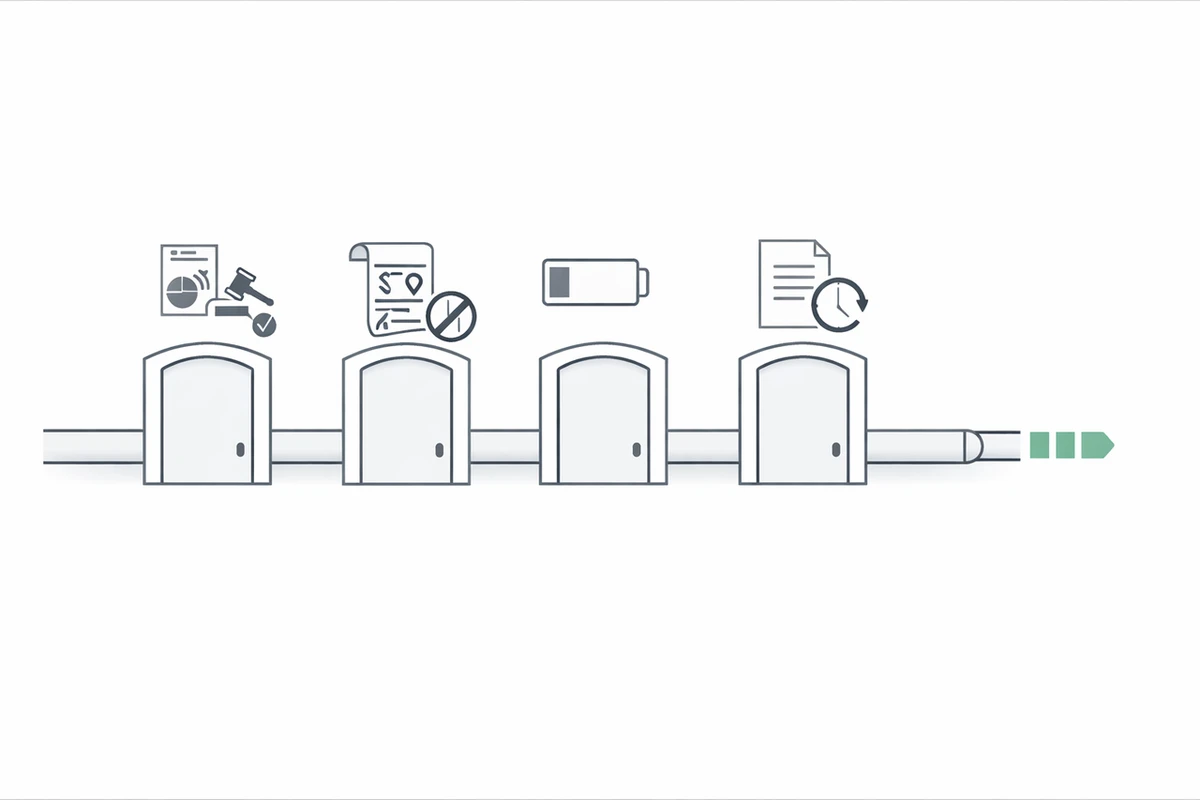
There are a few recurring hurdles that show up across organizations:
• Diagnostics that never lead to decisions.
• Roadmaps that are too big to fund.
• Assessment fatigue among stakeholders.
• Models that age faster than the business.
The sections below outline these hurdles and practical ways to design assessments that move past them.
Hurdle 1: Diagnostics Without Decisions
Symptoms:
• Long reports, short action lists.
• No clear owner for each initiative.
• No explicit choices about what not to do.
How to clear it:
Tie the assessment to a specific decision forum (e.g., portfolio review, board offsite) and insist on 3–5 concrete commitments: what to fund, what to stop, and what to revisit later.
Hurdle 2: Roadmaps Too Big to Fund
Symptoms:
• Dozens of initiatives, no sequencing.
• Every function sees its priorities reflected, but no trade-offs.
• Finance sees a wish list, not an investable plan.
How to clear it:
Work with your partner to group initiatives into 3–4 waves, each with a value thesis, cost envelope, and dependencies. Treat the maturity roadmap as a capital allocation instrument, not a backlog of good ideas.
Hurdle 3: Assessment Fatigue
Symptoms:
• Stakeholders feel over-surveyed and under-heard.
• Teams see little visible change after giving input.
• Engagement drops for future assessments.
How to clear it:
Design visible wins into the first 90 days after the assessment. Communicate clearly what changed because people invested their time—policies simplified, blockers removed, pilots launched.
Hurdle 4: Static Models in a Moving Environment
Symptoms:
• Dimensions and examples feel generic or dated.
• Models do not reflect current AI, data, or regulatory realities.
How to clear it:
Select or design a model that can evolve—new lenses for data and AI, refreshed examples, and the ability to run targeted re-assessments by domain or business unit.
A 30-Day Reset If Your Assessment Stalled
Week 1 – Re-clarify what decisions the assessment should inform (funding, scope, priorities).
Week 2 – Rebuild a 3–4 wave roadmap from existing findings with explicit trade-offs.
Week 3 – Align a small steering group around the revised roadmap and metrics.
Week 4 – Launch one visible initiative and publish a short update tying action back to assessment insights.
This resets expectations and restores confidence that assessments lead somewhere.
Conclusion
Digital evolution is not blocked by a lack of frameworks. It is blocked by weak follow-through between assessment and action.
The most effective maturity programs are designed around the hurdles you have just read about. They start with the decisions that need to be made, shape the assessment accordingly, and build a governance cadence to keep the roadmap moving.
If you want support designing an assessment that leads to real decisions and delivery, consider DUNNIXER’s Digital Maturity Assessment for CIOs and CDOs as a structured starting point.
Author
Ahmed Abbas - Founder & CEO, DUNNIXER
Former IBM Executive Architect with 26+ years in IT strategy and enterprise architecture.
Advises CIO and CDO teams on digital maturity, portfolio governance, and decision-grade modernization planning. View author profile on LinkedIn.
Sources
- [01] Leading Digital: Turning Technology into Business Transformation
- [02] McKinsey & Company: Digital Strategy
- [03] Gartner Research: Digital Transformation & IT Maturity
- [04] Digital Transformation: Survive and Thrive in an Era of Mass Extinction
- [05] The Lean Startup: Continuous Innovation for Sustainable Growth
- [06] Harvard Business Review: Digital Transformation Collection
- [07] Artificial Intelligence in Practice: 50 Successful Company Uses
- [08] MIT Sloan Management Review: Digital Transformation
Looking to apply these ideas? Explore our Digital Maturity Assessment for CIOs and CDOs that turns assessment insights into an execution roadmap (plus governance support—not delivery). It covers consultant-led support to run the assessment, synthesize the roadmap, and lead executive working sessions for alignment.
Sample output includes: scorecard + benchmark view + roadmap excerpt.