A specialized DUNNIXER assessment engagement
Digital Maturity Assessment (consulting-led)
Baseline + benchmark + prioritized roadmap in 4–6 weeks—delivered as a scorecard + benchmark view + roadmap excerpt (executive readout).
A digital maturity assessment is an evidence-based evaluation of your organization’s digital capabilities across strategy, customer, data, technology, governance, and ways of working. It produces a quantified baseline, peer benchmark view, and prioritized roadmap so leadership can make controlled investment decisions with stronger execution confidence.
DUNNIXER provides consultant-led digital maturity assessment support for organizations that need an independent baseline, benchmark, and prioritized roadmap.
This engagement is for an assessment-specific need. For live pursuits, architecture authority, or delivery assurance and recovery, compare DUNNIXER's three core offers.
See what’s included (scope + artifacts)
Sample output includes: scorecard + benchmark view + roadmap excerpt.
What you get
A decision-ready package with tangible artifacts: scorecard, benchmark view, and a prioritized roadmap (with an executive readout deck).
The model covers strategy, customer, product, data, technology, ways of working, and governance to provide a complete view of digital readiness. Surveys, scoring, benchmarks, and scorecards follow the same approach described in our Digital Maturity Benchmarks, Surveys & Scorecards overview. If you want to run this internally without facilitation, compare the self-serve Digital Maturity Assessment Tool.
For community-banking model details, review the fact sheets for Digital Maturity for U.S. Community Banks and Data Maturity for U.S. Community Banks.
Digital maturity scorecard
- A structured maturity model across strategy, customer, product, data, technology, ways of working, and governance.
- Organization-wide survey plus optional interviews for contextual evidence.
Benchmarking vs peers
- Quantified benchmark view by dimension, business unit, or region.
- Gap themes with root causes and implications for strategy and spend.
Prioritized roadmap
- 12–18 month prioritized roadmap with initiative sequencing and ownership.
- Executive and board-ready narrative deck for investment decisions.
Examples of what the assessment can uncover
- Whether AI and automation initiatives are constrained by data, governance, or process maturity.
- Where cloud adoption or modernization efforts are slowed by legacy systems or unclear ownership.
- How customer or product teams differ in digital capabilities compared to technology or operations.
Related banking context: digital banking maturity benchmarking.
Typical timing is 4–6 weeks from kickoff to final readout, depending on scope and stakeholder availability.
Sample Output
Sample artifacts include: scorecard + benchmark view + roadmap excerpt. In an initial conversation, we can walk through a redacted sample from a past engagement.
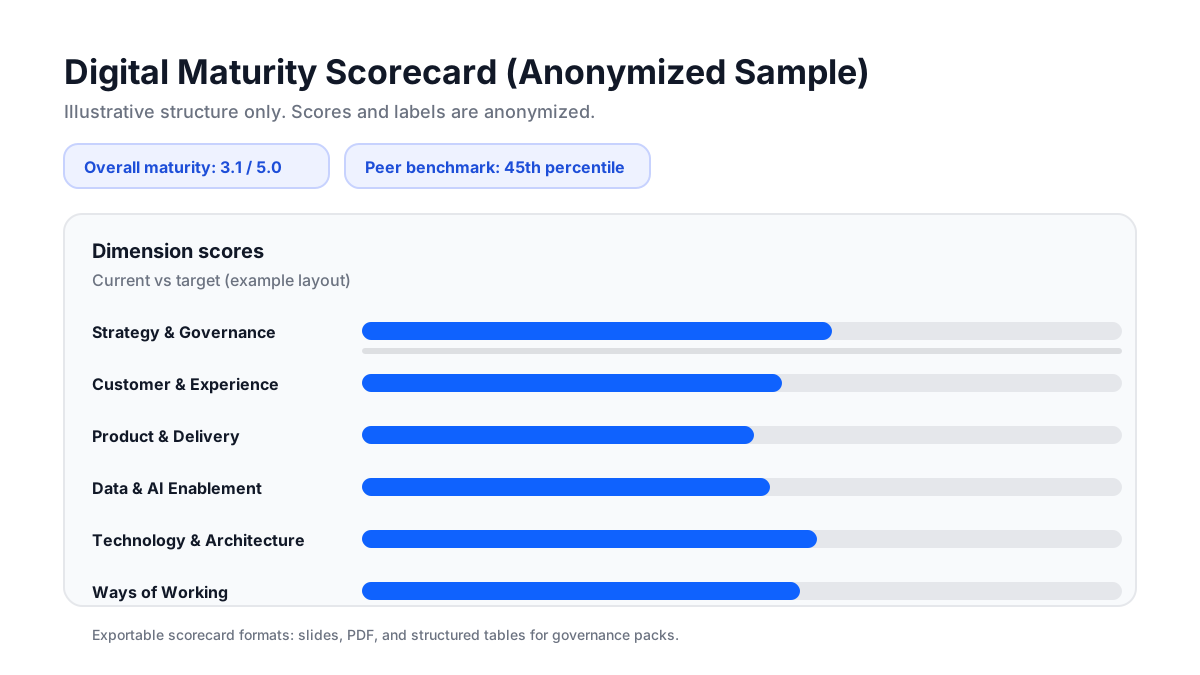
Scorecard slide (anonymized example).

Roadmap excerpt (anonymized example).
- Strategy & governance: 3.4
- Customer & experience: 3.0
- Product & delivery: 2.8
- Data & AI enablement: 2.9
- Technology & architecture: 3.2
- Ways of working: 3.1
Want a deeper walkthrough of benchmarks, surveys, scoring, and artifacts? See Digital Maturity Benchmarks, Surveys & Scorecards.
Illustrative Client Scenarios
Short example scenarios showing typical decisions and outcomes after the assessment.
Example scenario: SaaS platform provider (500–1,000 employees) with inconsistent digital adoption across teams.
We established a clear baseline of current capabilities and delivered a 6-month roadmap prioritizing automation and data integration. Early outcomes included measurable reduction in manual work and better cross-team alignment for scalable growth.
“The assessment gave us the clarity we needed to align our digital strategy with business goals.”
Example scenario: Mid-sized financial services firm (~$200M revenue) with compliance pressure and legacy-system constraints.
We benchmarked their operations against industry standards and outlined a phased modernization roadmap. In 4 months, they improved compliance-reporting speed and surfaced material cost-saving opportunities tied to system modernization.
“This was the foundation we needed to transform our digital infrastructure without disrupting operations.”
Decision examples clients use the assessment to make
- Align on a single baseline when portfolios and narratives conflict across business units.
- Identify root-cause constraints (data, operating model, governance) before scaling modernization.
- Make trade-offs explicit for AI and digital investment priorities in executive planning cycles.
Illustrative scenarios shown; figures and outcomes are example-only and not client performance guarantees.
By industry
See how the assessment applies to different operating contexts while keeping the deliverable consistent.
More: industries hub.
How the assessment works
Structured enough for consistency, light enough for busy executives.
The process is designed to fit into demanding executive schedules while still providing a rigorous, evidence-based view of digital maturity within 4–6 weeks.
1. Frame & scope
Align on objectives, scope, and key stakeholders. Confirm which units, regions, or functions are in scope and what decisions the assessment needs to support.
2. Run the assessment
Deploy the survey through the DUNNIXER platform, collect responses, and (if needed) run interviews and desk research to add context to the data. Survey deployment and scoring are automated through the platform, ensuring consistent data and faster analysis across teams and regions.
3. Synthesize & align
Build the scorecard and benchmark, identify key gaps, and co-create a focused roadmap. Close with an executive / board-ready readout to align on priorities.
Talk about whether this is the right fit
CIOs and digital leaders use this assessment to align executives, reset expectations, and guide multi-million-dollar digital and AI investments.
If you’re a CIO, CDO, or Head of Digital and need a credible digital maturity baseline and roadmap, we can start with a short initial fit conversation.
Scope and engagement model
Engagement structure is tailored to your scope, stakeholders, and delivery outcomes.
- Scope varies based on business-unit coverage, stakeholder depth, and geographic footprint.
- Includes scorecard, benchmark view, prioritized roadmap, and executive readout deck.
- Delivered consulting-led and platform-supported for repeatability and speed.
Scoping an agentic AI build-out specifically? See Architectural Insights for practitioner guides on context and state architecture.
Frequently asked questions
Practical details about how the Digital Maturity Assessment runs in practice.