What Are Application Portfolio Rationalization Tools?
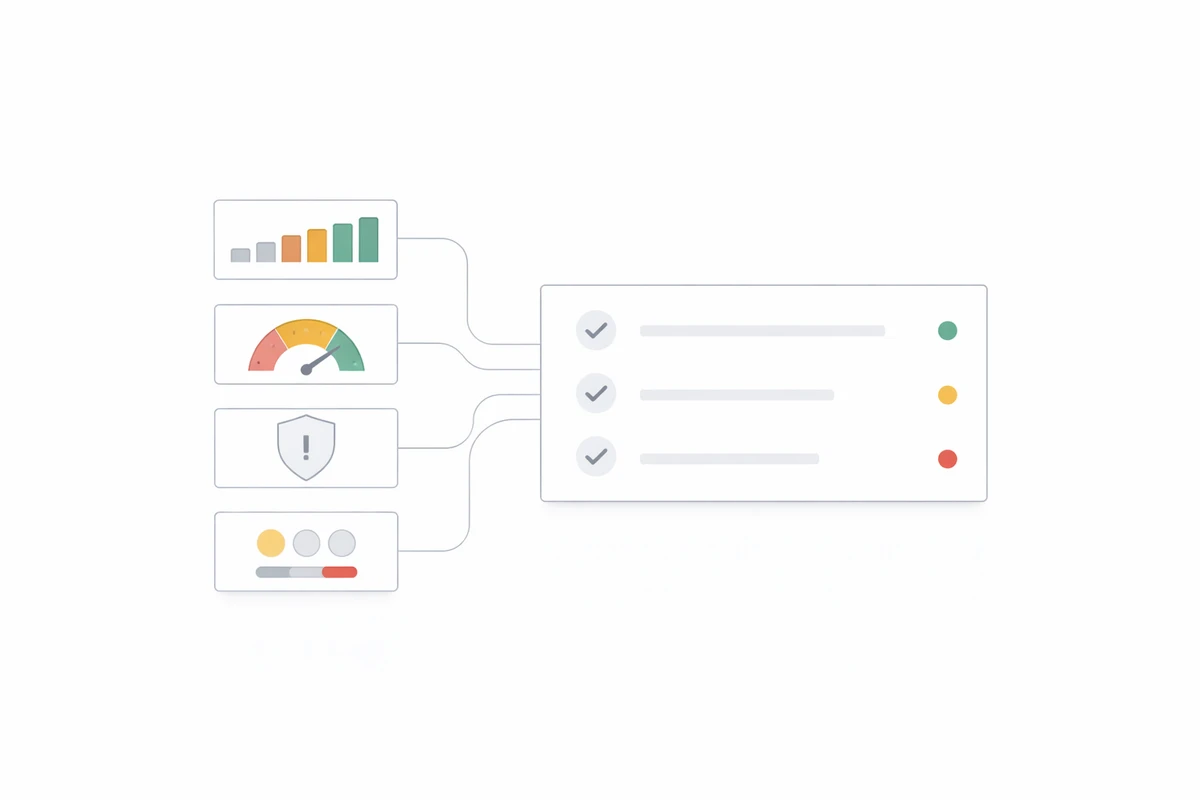
Application portfolio rationalization tools are platforms that help enterprises evaluate which applications to keep, modernize, consolidate, or retire using auditable signals. They replace spreadsheet-driven reviews with structured data on cost, risk, usage, architecture, and dependencies so APR decisions are faster, more defensible, and repeatable.
Most enterprises investigating application portfolio rationalization tools are trying to fix the same failure mode: high-stakes keep, modernize, and retire decisions made from fragmented spreadsheets, stale inventories, and unclear accountability. This guide is built for commercial investigation, not listicle-style browsing. It starts with evaluation criteria that influence decision quality in real governance forums, including signal completeness, traceability, integration fit, workflow control, and AI-assisted prioritization. It also shows where common limitations appear in practice so leadership teams can distinguish platform claims from operational reliability. The objective is straightforward: select tooling that can support defensible rationalization decisions at enterprise scale, not just generate attractive dashboards.
What Problems Do APR Tools Solve?
- Fragmented application inventories across teams and business units
- Unclear dependencies that increase retire or replace risk
- Weak evidence linking applications to business capability value
- Inconsistent prioritization logic across cost, risk, and modernization outcomes
Key Signals Used in APR Automation
- Cost and TCO profiles by application and capability
- Usage and process telemetry showing actual business reliance
- Architecture and dependency maps for change-risk visibility
- Technical debt, security, and lifecycle risk indicators
Table of contents
Application Portfolio Rationalization Tools - Comparative Overview
| Tool / Platform | Primary Strength | Best For | Automation Depth | Key Data Signals | Typical Limitation |
|---|---|---|---|---|---|
| SAP LeanIX | EA-centric inventory normalization and capability mapping | EA-driven rationalization | High | Inventory, ownership, capability fit, dependency context | Survey discipline and governance ownership are required |
| ServiceNow APM | CMDB-linked dependency and operational context | Integrated automation stacks | High | Service dependencies, CMDB relationships, operational cost | Output quality depends on CMDB hygiene |
| CAST Highlight | Portfolio-scale code intelligence | Technical debt prioritization | Medium-High | Code risk, cloud readiness, technical debt indicators | Needs business context for final disposition decisions |
| Flexera | License, SaaS, and spend visibility | Cost-focused portfolios | Medium | License utilization, SaaS overlap, spend concentration | Limited architecture-depth without complementary EA tooling |
| Planview | Scenario-based financial governance | Investment governance in multi-year APR programs | Medium | Benefit traceability, scenario outcomes, portfolio economics | Requires mature financial baselines and planning discipline |
Tool Categories for APR Automation
Most portfolios combine categories rather than rely on one platform: EA systems for structural context, code intelligence for technical truth, portfolio governance tooling for value traceability, and AI-assisted data harmonization for cycle-time compression.
How to Select Application Portfolio Rationalization Tools
Evaluation Criteria
- Signal completeness (cost, risk, usage, architecture)
- Decision traceability
- Integration ecosystem
- Governance workflow
- AI-assisted prioritization
- Data model extensibility
Build selection decisions around evidence continuity and governance confidence. For teams validating prerequisites, a structured portfolio modernization strategy baseline helps verify whether your data operating model can sustain decision-grade APR.
Best-Fit Positioning by Rationalization Objective
- Best for EA-driven rationalization: platforms with capability mapping and dependency modeling depth.
- Best for cost-focused portfolios: tooling with strong SaaS, license, and TCO visibility.
- Best for technical debt prioritization: code intelligence engines that quantify modernization burden.
- Best for integrated automation stacks: platforms that connect service management, portfolio, and governance workflows.
For adjacent decision contexts, see our enterprise application rationalization case patterns, vendor due-diligence risks in technology portfolio optimization decisions, and capability measurement methods in digital maturity benchmarks and scorecards.
Why automation still matters after tool selection
Once shortlists are created, many programs still stall because evidence pipelines are weak. APR decisions depend on current inventory coverage, dependency transparency, cost and usage accuracy, and a governance model that can defend each keep, modernize, consolidate, or retire call. Tools matter because they turn those signals from annual snapshots into repeatable operating data.
Automation changes the feasibility frontier. Platforms that discover assets, analyze code, and visualize business value can produce a more stable portfolio truth and compress the time between assessment and action. The strategic implication is not that automation eliminates judgment; it is that it reallocates leadership attention away from reconciling data and toward resolving trade-offs: operational risk versus simplification, cost discipline versus product velocity, and local optimization versus enterprise coherence.
Modern platforms increasingly combine AI-enabled discovery, automated stakeholder surveys, and portfolio analytics. This replaces episodic assessments with continuous rationalization, where the organization can maintain a current view of redundancies, technical health, and modernization readiness rather than restarting the analysis each budget cycle.
Enterprise architecture platforms as the portfolio system of record
Enterprise architecture (EA) platforms serve as a decision backbone for APR by creating a single source of truth that links applications to business capabilities, processes, information domains, and key dependencies. For executives, the primary value is governance: a consistent model that makes redundancies visible, clarifies ownership, and supports defensible decommissioning decisions. Without that model, rationalization tends to stall at the point where disagreements about criticality and impact become unresolvable.
What EA platforms automate in APR
Inventory creation and normalization
Consolidate fragmented data sources into an application catalog with consistent attributes.
Capability mapping
Reveal functional overlap and highlight many-applications-for-one-outcome patterns that drive cost and risk.
Dependency visualization
Reduce change risk by clarifying upstream and downstream impacts before retire or replace decisions.
Fit assessment workflows
Use automated surveys and scoring models that standardize how business and technical stakeholders evaluate applications.
SAP LeanIX: Continuous rationalization through AI-enabled inventory and surveys
LeanIX is positioned around continuous portfolio management, emphasizing automation for building and maintaining the inventory and for gathering structured fit data from stakeholders. Its AI-enabled approaches to extracting information from existing artifacts and using automated surveys help reduce the friction of keeping the catalog current. The executive advantage is consistency: when functional and technical fit are collected using repeatable instruments, leaders can compare applications across domains with fewer exceptions and less argument about methodology.
However, survey-driven fit data introduces a governance requirement: leadership must define who is accountable for responses, how unknown values are treated, and how disagreements are resolved. Without those controls, automation can scale inconsistency as efficiently as it scales insight.
ServiceNow Application Portfolio Management: CMDB-driven dependency and cost visibility
ServiceNow APM leverages an organization's CMDB to map dependencies and relate applications to services, infrastructure, and operational relationships. This matters because rationalization is often blocked by fear of unintended consequences. A dependency-aware view enables executives to distinguish between applications that are genuinely entangled in critical services and those that appear complex mainly because the organization lacks visibility.
ServiceNow's portfolio perspective is frequently linked to total cost of ownership (TCO) reasoning by combining operational, infrastructure, and service management signals. The constraint is data hygiene: if CMDB coverage and accuracy are weak, the confidence of APM-derived recommendations will be questioned, and rationalization decisions will revert to risk-averse default behaviors.
Ardoq: Dynamic visualization to test retire and replace scenarios
Ardoq emphasizes interactive, dynamic visualizations and automated data collection that help executives understand the operational and business-process impact of retiring or replacing applications. In APR, visualization is not cosmetic; it is a control mechanism. When stakeholders can see how a proposed change propagates across processes and dependencies, the organization can shift from opinion-based debates to impact-based deliberation.
Ardoq-style scenario exploration also supports sequencing decisions. Rationalization is not a single choice between keep and modernize or retire. It is a staged program where timing and interdependencies determine risk exposure and value realization.
Software intelligence and code analysis to validate technical risk and readiness
APR produces value only if the organization can separate business importance from technical viability. Many application decisions are distorted by incomplete understanding of code health, security posture, and modernization complexity. Software intelligence tools address this by scanning source code and associated artifacts to create objective signals about technical debt, cloud readiness, and exposure to security and compliance risks.
Where code intelligence changes executive decisions
Modernization feasibility
Identify complexity drivers that influence cost, timeline, and change risk.
Security and resilience posture
Use repeatable indicators that can be trended and compared across the portfolio.
Prioritization discipline
Distinguish high-value applications that are technically fragile from those that are stable and more suitable for incremental change.
CAST Highlight: Portfolio-scale scanning as a technical control tower
CAST Highlight is designed to rapidly scan large numbers of applications and provide standardized insights into technical debt, risk, and cloud maturity. In APR terms, it functions as a technical control tower: it helps leadership quantify the modernization burden embedded in the portfolio rather than relying on narrative assessments from individual teams.
Executives should treat these outputs as decision inputs, not decisions. Code scanning can indicate hotspots and likely complexity, but leadership still needs to integrate business criticality, operational constraints, and regulatory obligations to determine the appropriate disposition.
Skan AI: Process intelligence to confirm what is actually used
One of the most common rationalization failures is retiring the wrong application because usage patterns were assumed rather than observed. Process intelligence approaches, including Skan AI's emphasis on observing real user interactions, can provide a practical proxy for actual application relevance. By identifying where work truly occurs across systems, leaders can detect redundant applications that persist mainly due to habit, unclear ownership, or fragmented process design.
This telemetry-oriented view supports sharper trade-offs. An application that appears redundant in an architecture model may still be critical to a high-frequency process. Conversely, an application defended as mission critical may be lightly used, suggesting a controlled retirement or consolidation path with limited business disruption.
Strategic portfolio management tools to align rationalization with financial outcomes
APR is frequently justified through cost and agility benefits, but execution fails when financial baselines and scenario models are weak. Strategic portfolio management (SPM) tools emphasize investment governance, scenario planning, and the alignment of change portfolios to strategic outcomes. For executives, the value is an integrated view of rationalization decisions as capital allocation and risk decisions, not purely technology hygiene.
What SPM automation contributes to APR governance
Scenario-based forecasting
Compare future-state options and expose hidden costs of delay or partial rationalization.
Benefits traceability
Link application dispositions to measurable operating-model impacts rather than abstract savings claims.
Program-level controls
Coordinate rationalization work with other transformations, reducing change collisions.
Planview: Portfolio-level financial tracking and modernization scenarios
Planview is commonly used to support large-scale portfolio planning where leaders need to model future-state scenarios and evaluate expected returns from modernization and simplification. For APR, that capability helps answer a governance question executives often face: Are we funding rationalization as a one-time cleanup, or as a durable shift in how we manage technology assets?
Scenario planning also highlights second-order effects. For example, accelerating retirements can improve cost discipline but may increase operational risk if critical process dependencies are underestimated. A portfolio planning lens encourages explicit recognition of these trade-offs rather than implicit acceptance through ad hoc decisions.
Flexera: IT visibility to detect shadow IT and optimize SaaS spending
Flexera's asset management and visibility focus is particularly relevant where SaaS sprawl and shadow IT undermine rationalization. License waste and overlapping subscriptions are often symptoms of a deeper governance gap: purchasing autonomy exceeded architectural and security oversight. Tools that improve discovery and usage visibility support rationalization decisions that combine cost optimization with stronger policy enforcement and risk management.
From an executive standpoint, SaaS optimization is not only a savings lever. It is also a control and auditability improvement, especially where access management, data residency expectations, or third-party risk requirements apply.
Specialized AI agents as an emerging acceleration layer
Beyond platforms and analytics, a newer approach is the use of specialized AI agents to harmonize data across tools and monitor portfolios in near real time. The promise is speed: reducing the time it takes to assemble inventories, reconcile attributes, and identify redundant spend. Reports on vendor-led agent approaches suggest material reductions in assessment time and meaningful identification of redundant costs.
What AI agents can and cannot automate
AI agents can accelerate the mechanics of rationalization by continuously collecting signals, reconciling duplicates, and flagging candidate consolidation opportunities. This supports the executive intent to realize aspired benefits faster by reducing the latency between observation and decision. However, the constraint is explainability and control. If recommendations cannot be audited, what data was used, what logic was applied, and what uncertainties remain, leaders will struggle to use them in governance forums, especially where risk, compliance, or audit stakeholders are involved.
Cognizant AI agents: Monitoring and data harmonization for faster APR cycles
Cognizant has described an AI-agent approach that emphasizes real-time monitoring and harmonization of portfolio data, with reported outcomes including faster assessment cycles and identification of redundant spend. The executive takeaway is not a single tool claim; it is the direction of travel: rationalization is moving from periodic projects to an operating capability, where AI helps maintain current portfolio understanding as the environment changes.
How to choose tool capabilities based on the benefits you are targeting
Executives typically rationalize portfolios to achieve a mix of cost discipline, operational resilience, faster change, improved security posture, and clearer accountability. The tool question is therefore a benefits-to-evidence mapping problem: which signals must be trusted to defend decisions, and what automation reduces the cost of maintaining those signals over time.
If redundancy elimination is the priority
Capability mapping and process or usage visibility are critical to avoid removing an application that is structurally embedded in key workflows.
If modernization velocity is the priority
Code intelligence is essential to separate refactor candidates from rewrite traps and to quantify technical risk across the portfolio.
If cost reduction is the priority
Financial baselining and SaaS or license visibility are necessary to prevent savings from being offset by untracked replacement spend.
If risk reduction is the priority
Dependency mapping and audit-ready controls determine whether rationalization can proceed without creating operational or compliance surprises.
In practice, portfolios rarely benefit from a single category alone. EA platforms provide structure, code intelligence adds technical truth, SPM adds financial governance, and emerging AI layers reduce friction. The executive challenge is coordinating these perspectives so that the organization does not optimize for what is easiest to measure while missing what is most material to outcomes and risk.
Rationalization decision confidence for aspired APR benefits
Rationalizing an application portfolio for aspired benefits depends on the organization's ability to convert fragmented signals into decision-grade evidence. That is a maturity question: how consistently the enterprise can discover assets, assign ownership, measure usage and cost, assess technical and security risk, and govern dispositions across lines of business.
A digital maturity assessment provides a structured way to test whether the operating model can sustain rationalization beyond a single initiative. It clarifies where the enterprise has strong foundations, for example dependency visibility or standardized fit assessments, and where constraints will slow benefit realization, such as CMDB data quality, inconsistent inventory ownership, or weak financial baselines.
Used appropriately, the assessment becomes a governance instrument for sequencing and confidence. It helps executives decide where to begin, which benefits are realistic in the near term, and which prerequisites must be strengthened to avoid creating new risks while removing legacy complexity. Within DUNNIXER's dimensions of strategy, governance, technology, data, operating model, and risk controls, leaders can benchmark readiness to automate APR evidence collection and to institutionalize rationalization as a continuous capability rather than a periodic clean-up. This is the practical context in which the DUNNIXER Digital Maturity Assessment supports executive decision-making without substituting for it.
Author
Ahmed Abbas - Founder & CEO, DUNNIXER
Former IBM Executive Architect with 26+ years in IT strategy and enterprise architecture.
Advises CIO and CDO teams on digital maturity, portfolio governance, and decision-grade modernization planning. View author profile on LinkedIn.
Sources
- [01] SoftwareReviews - Application Portfolio Management Category
- [02] Info-Tech - Application Portfolio Management Reviews
- [03] LinkedIn - Top Application Portfolio Management APM Tools
- [04] LeanIX - Application Portfolio Assessment Use Case
- [05] LeanIX - Enterprise Architecture Features
- [06] CPO Club - Product Portfolio Management Tools
- [07] Skan AI - Application Portfolio Rationalization
- [08] Ardoq - Application Portfolio Management
- [09] Neev Systems - Rationalizing Applications to Reduce Complexity and Cost
- [10] Cognizant - AI for Application Portfolio Rationalization
- [11] SAP - LeanIX Solutions
- [12] LeanIX - Midsize Companies Advantages
- [13] LinkedIn - Top Application Portfolio Management Companies