Regulatory Alignment Crosswalk for Community Bank Technology Exams
A practical downloadable structure for mapping exam readiness artifacts to recognized FFIEC domains and agency supervisory references.
Built for community banks, this crosswalk helps teams organize technology and cybersecurity evidence in the same domain structure exam teams commonly use.
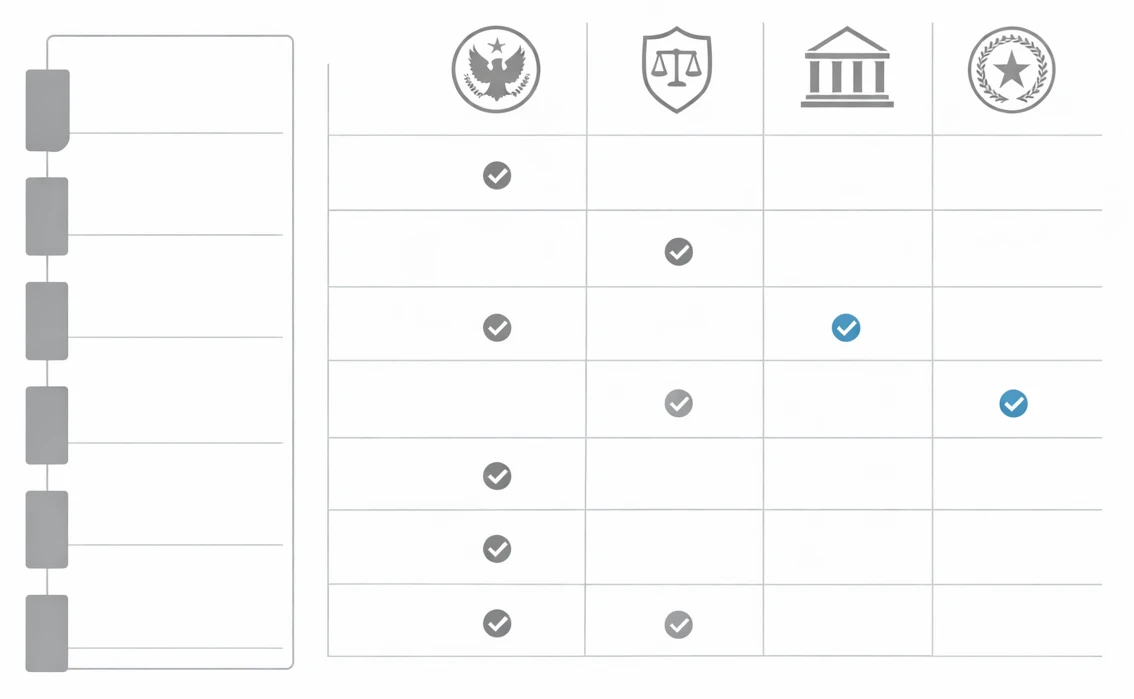
Community banks preparing for technology and cybersecurity examinations face a recurring challenge: translating day-to-day control work into the language, structure, and evidence expectations used by federal exam teams. The result is often unnecessary friction. Teams scramble to assemble artifacts, board materials do not clearly connect to examination themes, and what to show varies by examiner.
To reduce that ambiguity, DUNNIXER created a practical, downloadable asset:
Regulatory Alignment Crosswalk (FFIEC, FDIC, OCC, Federal Reserve)
This spreadsheet is designed as a structured reference that links widely used examination domains to the supervisory sources and adoption signals of the federal banking agencies.
It does not replace your policies or compliance program; it helps you organize existing evidence in a structure exam teams commonly use.
What the Crosswalk Is
The spreadsheet organizes technology examination readiness around the FFIEC IT Examination Handbook booklet structure, a commonly used taxonomy for examiner scoping and review. It then maps that structure to evidence that each federal banking agency has formally distributed or adopted those booklets through its own supervisory communications.
Each row maps an FFIEC IT Handbook booklet domain to agency-specific supervisory issuances (FDIC FILs, OCC Bulletins, and Federal Reserve SR letters) that show distribution or adoption for supervisory use.
FFIEC examination domain -> source booklet -> agency adoption/distribution references -> practical exam alignment
Why This Matters for Community Banks
Community banks operate with leaner technology and risk teams, heavier reliance on third parties, and tighter documentation bandwidth than larger institutions. Examinations still require clear governance evidence and control artifacts. The crosswalk helps by:
Standardizing readiness organization
Uses a recognized examination structure teams can apply consistently across preparation cycles.
Reducing uncertainty
Clarifies how exam teams typically frame technology and cybersecurity reviews.
Improving internal coordination
Aligns IT, InfoSec, Risk, Compliance, Audit, and vendor management on one domain language.
Strengthening board oversight packages
Makes board and committee reporting easier to map to examiner categories.
What Is Inside the Spreadsheet
1) Checklist Sections Based on Recognized FFIEC Domains
Each row starts with a top-level examination section aligned to the FFIEC IT Handbook booklet structure. Core sections include Management, Information Security, Architecture/Infrastructure/Operations, Business Continuity Management, Development/Acquisition/Maintenance, and Outsourcing Technology Services. These headings are designed to serve as a practical table of contents for an exam checklist or readiness binder.
2) The Source Column
For each checklist section, the spreadsheet identifies the related FFIEC IT Handbook booklet as the primary source domain.
3) Agency Columns Showing Adoption and Distribution Lineage
For each checklist section, the spreadsheet provides columns for FFIEC, FDIC, OCC, and Federal Reserve. Each agency column captures a concise description of the related supervisory reference and includes a link to the issuance or page showing distribution or adoption in supervisory practice.
How to Use the Crosswalk
Use Case 1: Build a Technology Exam Checklist for Community Banks
Use the checklist sections as your primary headings. Under each heading, organize evidence in a repeatable format such as policies and standards, governance artifacts (minutes, approvals, reporting), control operation evidence (reviews, tickets, logs, attestations), metrics and trend reports, and testing outcomes with remediation closure.
Use Case 2: Create a Readiness Binder That Matches Examiner Navigation
Examiners frequently work within domain-based review paths. Structuring materials under the recognized booklets reduces time spent re-explaining where evidence lives and why it matters.
Use Case 3: Align Board Reporting to Examination Themes
Use the sections to standardize board and committee dashboards so oversight evidence maps directly to examiner topic areas.
Use Case 4: Improve Vendor Oversight and Audit Coordination
Third-party risk, security, resilience, and change control often span multiple owners. The crosswalk structure makes handoffs and accountability clearer.
30-60 Minute Implementation Checklist
Set the binder structure
Create a folder or readiness binder using the same FFIEC booklet headings as the crosswalk.
Assign domain owners
Set one accountable owner per domain (IT, InfoSec, Risk, Compliance, Audit, or vendor management).
Populate the five evidence types
Under each heading, store governance artifacts, policy and standards, control operation evidence, monitoring metrics, and testing/remediation closure evidence.
Run a recurring refresh cycle
Update quarterly and after material technology changes, incidents, or control design changes.
Who This Asset Is For
This crosswalk is built for community banks and the teams that support exam readiness, including CIO and IT leadership, CISO and Information Security leadership, Risk and Compliance leaders, Internal Audit, third-party risk owners, and MSP and key control operators involved in evidence production.
How This Fits Within DUNNIXER's Approach
DUNNIXER focuses on operationalizing technology and transformation readiness through structured capability assessment and measurable roadmaps. This crosswalk is a lightweight, practical tool that helps teams organize real evidence against real supervisory structures without inventing new frameworks.
Download the Spreadsheet
Download the Regulatory Alignment Crosswalk (FFIEC, FDIC, OCC, Federal Reserve) and use it as the backbone for a community-bank-ready technology exam checklist and evidence library.
Download the Regulatory Alignment Crosswalk© 2026 DUNNIXER. Internal-use license. No external redistribution. Informational only; not compliance advice.
Copyright and Permitted Use
© 2026 DUNNIXER. All rights reserved.
This downloadable spreadsheet is provided for internal use by the downloading organization for exam readiness planning and evidence organization. You may copy and adapt it for internal purposes, including use in internal documentation and board or committee materials. You may not redistribute, resell, publish, or host the spreadsheet, including modified versions, externally without prior written permission from DUNNIXER.
Disclaimer: This material is provided for informational purposes and does not constitute legal, regulatory, or compliance advice. Banks should consult their compliance, legal, and supervisory contacts as appropriate.
Author
Ahmed Abbas - Founder & CEO, DUNNIXER
Former IBM Executive Architect with 26+ years in IT strategy and enterprise architecture.
Advises CIO and CDO teams on digital maturity, portfolio governance, and decision-grade modernization planning. View author profile on LinkedIn.
Frequently asked questions
Quick answers on using the crosswalk for exam checklisting, board reporting, and evidence organization.