Overview
Risk and resilience determine whether transformation can proceed without destabilizing the institution. The real issue is whether the bank can change systems, controls, and operating processes while preserving service continuity, compliance, and management visibility.
These programs usually fail when scope expands faster than control design, testing, and evidence collection. Risk rises when leaders assume resilience will survive modernization by default rather than by deliberate design.
What Risk and Resilience Must Address
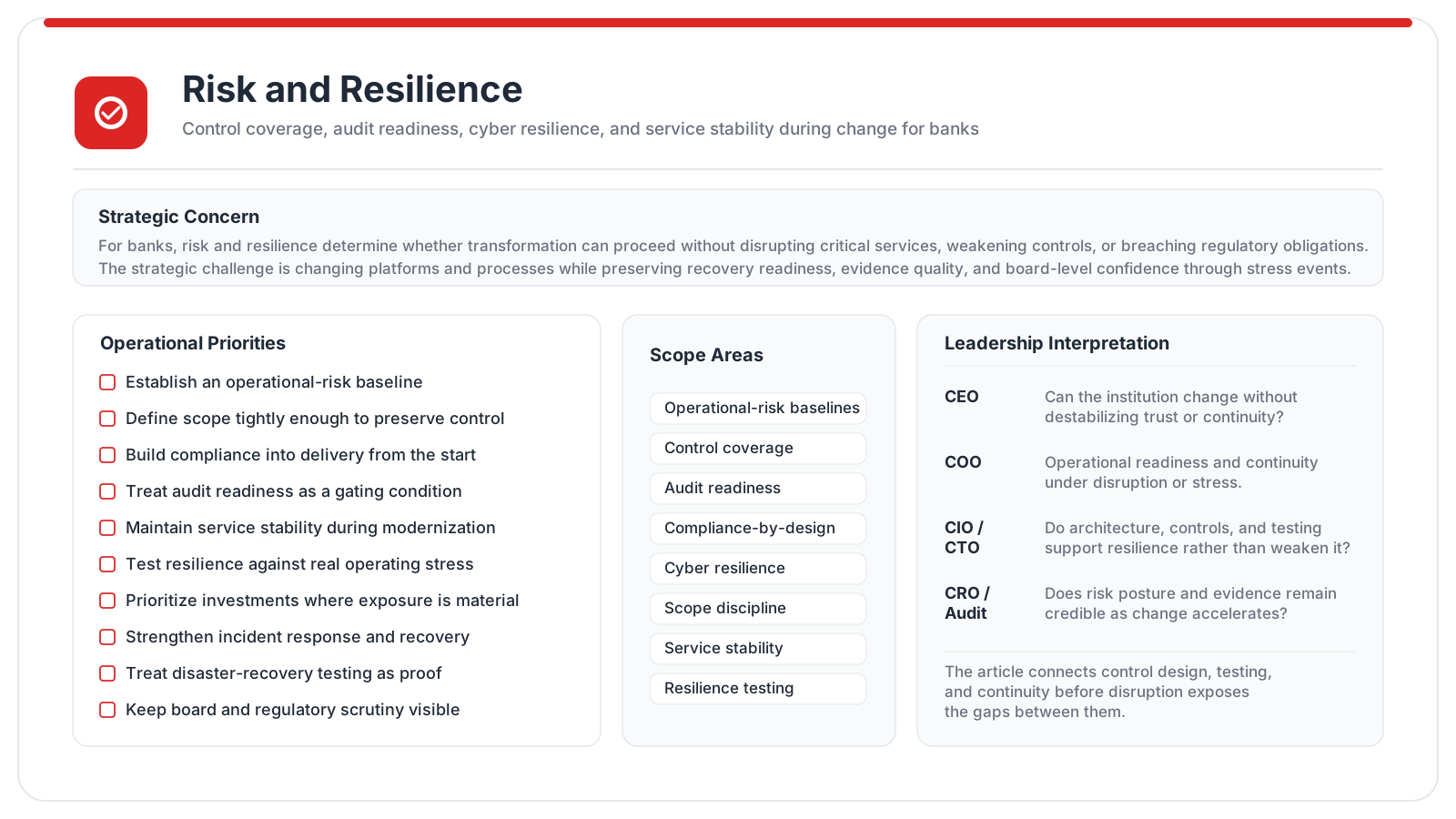
It covers operational-risk baselines, control coverage, audit readiness, resilience testing, compliance-by-design, cyber resilience, scope discipline, and service stability during change.
That breadth matters because the issue is not simply how to reduce risk on paper. It is whether the bank can absorb disruption, govern change, and continue operating credibly under scrutiny.
Ten Priorities That Define a Credible Approach
1. Establish a usable operational-risk baseline. Leadership needs a current view of where exposure is concentrated before committing to more change. See Operational Risk Baseline.
2. Define scope with control in mind. Programs become riskier when scope is not bounded tightly enough to preserve oversight and execution discipline. See Scope Control in Banking Programs.
3. Build compliance into delivery rather than checking it at the end. Controls hold better when they are embedded in the delivery pipeline from the start. See Compliance by Design.
4. Treat audit readiness as a gating condition. Major change should not move forward if the bank cannot explain control design, evidence, and current risk posture. See Audit Readiness as a Gating Factor.
5. Maintain service stability during modernization. The bank has to keep critical operations running while change is underway, not only after the program ends. See Maintain Service Stability During Modernization.
6. Use resilience frameworks that reflect real operating conditions. Resilience should be tested against interruption, recovery, and operational pressure, not only against checklist maturity. See Cyber Resilience Framework.
7. Prioritize resilience investments where they reduce material exposure. Not every control gap is equal, and not every investment improves operating stability in the same way. See Operational Resilience Investment Priorities.
8. Make incident response and recovery capabilities decision-grade. Response quality matters only if leadership can rely on it under stress. See Incident Response Maturity.
9. Treat disaster-recovery testing as proof, not ritual. The bank needs to know whether recovery capabilities actually work under realistic conditions. See Disaster Recovery Testing Program.
10. Keep board and regulatory scrutiny visible in the strategy. Risk and resilience programs weaken quickly when oversight expectations are treated as downstream reporting issues rather than design constraints. See Board and Regulatory Scrutiny.
How Leadership Should Use This
For the CEO, this is a question of whether the institution can change without destabilizing service, compliance, or trust. For the COO, it is about operational continuity and readiness under stress. For the CIO and CTO, it is about whether architecture, controls, and testing support resilience rather than undermine it. For the CRO and Chief Audit Executive, it is about whether risk and evidence remain credible as change accelerates.
Its role is to connect control design, testing, and operating continuity before disruption exposes the gaps between them.
What a Credible Approach Looks Like
A strong resilience posture shows clear risk baselines, explicit scope boundaries, embedded controls, audit-ready evidence, tested recovery capability, and governance strong enough to protect service continuity during change.
It should also make trade-offs visible. If the bank is taking on more delivery speed, broader scope, or tighter control in different parts of the program, those choices should be explicit and governed rather than left to emerge through execution pressure.
What Matters Most
Risk and resilience matter when modernization is under stress, not only when plans are on track. Its value lies in protecting service continuity, control credibility, and management confidence while change is taking place.
The strategic question is not whether the bank understands its risks. It is whether it can keep operating through them while still changing.
More Information
- Risk and Resilience Hub
Browse all briefs and supporting analysis connected to risk and resilience.
- Reducing Vendor and Execution Risk in Community Banking
A practical risk baseline for leadership teams concerned with dependency, governance, and operational fragility.
- Regulatory Alignment Crosswalk for Community Bank Technology Exams
A useful companion when resilience, controls, and regulatory expectations need to be read together.
- Cloud and Third-Party Risk
How external dependencies affect resilience, control coverage, and oversight.
- Payments Modernization
How fraud, liquidity, and operational readiness shape payment modernization risk.
Related Briefs
FAQs
What should a risk and resilience strategy make clear?
It should answer which operational and technology risks matter most, how resilience will be measured, what controls are required before change proceeds, where risk tolerances sit, and how the bank will maintain service stability under stress and modernization pressure.
Why is resilience more than a compliance issue?
Because resilience determines whether the bank can continue operating through disruption, not simply whether it has documented controls. The issue is whether governance, architecture, testing, and operating discipline can withstand real pressure.
How should senior leaders use this?
They should use it to decide what risks are binding, what resilience investments come first, how scope should be controlled, and what evidence is needed before major change is approved or accelerated.
What makes this useful?
It clarifies operational-risk baselines, control coverage, audit readiness, resilience testing, regulatory expectations, and the management disciplines needed to modernize without losing stability.