Overview
Payments modernization succeeds when the bank can introduce faster payments and broader change without creating unacceptable risk in fraud, liquidity, resilience, or customer operations.
These programs usually underperform when product ambition, fraud controls, treasury readiness, and implementation sequencing evolve separately. Risk grows when the bank adopts faster rails before it has built the disciplines required to manage them.
What Payments Modernization Must Address
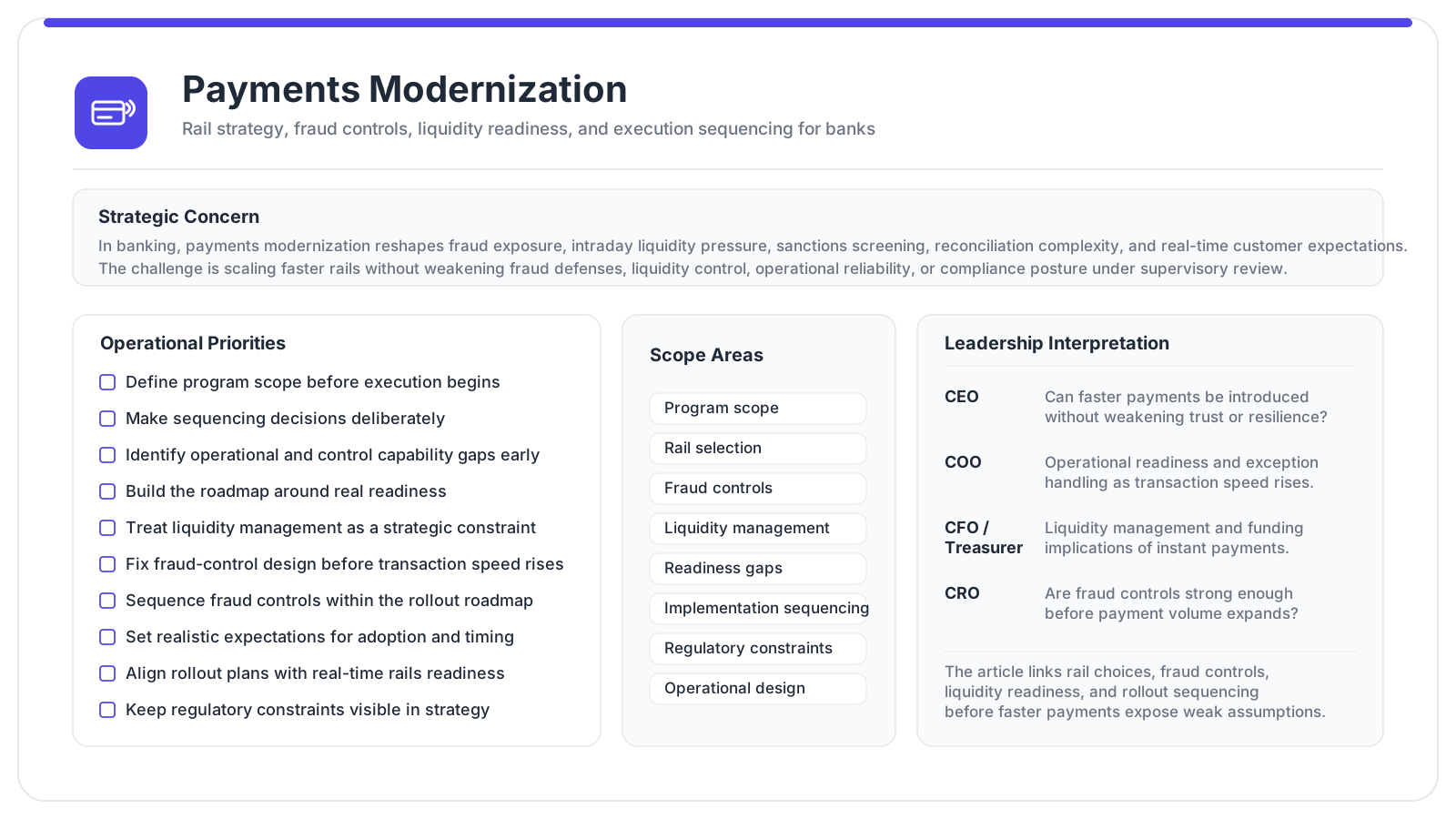
It covers scope, rail selection, fraud controls, liquidity management, readiness gaps, implementation sequencing, regulatory constraints, and operational design for real-time and instant payments.
That breadth matters because payments modernization must remain safe, scalable, and commercially credible as money moves faster.
Ten Priorities That Define a Credible Approach
1. Define the scope before committing to the program. The bank needs clarity on which products, flows, customer segments, and rails are actually in scope before execution begins. See Scope Payments Modernization Program.
2. Make the sequencing decision deliberately. Payments modernization should reflect trade-offs across speed, fraud exposure, liquidity needs, and implementation readiness.
3. Identify the capability gaps early. Faster rails fail when the bank has not built the operational and control capabilities required to support them.
4. Build the roadmap around actual readiness. The program needs more than a target date; it needs a sequence that reflects dependencies, operating changes, and control build-out.
5. Treat liquidity management as a strategic constraint. Faster settlement changes how the bank manages funding, intraday pressure, and operational exposure.
6. Fix fraud control design before transaction velocity rises. Instant and real-time rails expose weak fraud controls much faster than legacy payment environments do. See Real-Time Payments Fraud Controls.
7. Sequence fraud controls as part of the rollout, not after it. The protection model should be designed into the roadmap rather than layered on later in response to loss events.
8. Set realistic expectations on adoption and timing. Modernization plans weaken quickly when rollout assumptions ignore operational readiness and market reality.
9. Align the roadmap with current readiness for faster rails. The bank needs to know where control, operating, and technical gaps will slow adoption or increase risk.
10. Keep regulatory constraints visible as the strategy evolves. Payments modernization should reflect how supervisory expectations, policy tailoring, and adjacent digital-asset considerations may affect the roadmap.
How Leadership Should Use This
For the CEO, this is a question of whether faster payments can be introduced without weakening trust, control, or resilience. For the COO, it is about operating readiness and exception handling. For the CFO and Treasurer, it is about liquidity, funding impact, and the economics of rollout. For the CIO and CTO, it is about sequencing, integration, and platform readiness. For the CRO, it is about whether fraud and control design are strong enough before volume expands.
Its role is to keep product ambition, fraud design, and treasury readiness aligned before transaction speed increases.
What a Credible Approach Looks Like
A strong payments-modernization program shows clear scope, a sequenced roadmap, visible readiness gaps, strong fraud-control design, liquidity discipline, and governance that can handle operational and regulatory pressure as payments accelerate.
It should also make trade-offs visible. If the bank is choosing faster rollout, broader reach, or stronger control in different parts of the program, those choices should be explicit and governed rather than left to emerge through execution pressure.
What Matters Most
Payments modernization is valuable only when speed and reach do not outrun control. Its value lies in improving speed, reach, and customer relevance without allowing fraud, liquidity, or operating risk to outrun management control.
The strategic question is not whether faster payments matter. It is whether the bank can deliver them safely and at the right pace.
More Information
- Instant Payments Fraud Controls as a Feasibility Test for Scaling Real-Time Rails
Instant Payments Fraud Controls as a. Clarifies control priorities, resilience requirements, and practical risk-reduction actions for banking leaders.
- Scoping Payments Modernization Programs in Banks for 2026
How executives baseline domains and workstreams when real-time rails, ISO 20022 enforcement, and AI-era fraud pressures converge
- Payments Modernization Hub
Browse all briefs and supporting analysis connected to payments modernization.
- U.S. Banking Maturity Assessment Consulting
Supports broader banking modernization decisions where payments priorities compete with other strategic investments.
- Regulatory Alignment Crosswalk for Community Bank Technology Exams
Useful where faster payments, control design, and supervisory expectations intersect.
- Technology Investment and ROI
How to think about funding, prioritization, and value realization in payments programs.
Related Briefs
FAQs
What should a payments modernization strategy make clear?
It should answer which payment capabilities the bank needs, what rollout path is feasible, how fraud and liquidity risks will be managed, what regulatory constraints matter, and what operating changes are required before scale.
Why is payments modernization more than a rails decision?
Because faster rails change liquidity requirements, fraud exposure, operational readiness, risk controls, and customer expectations. Rail selection must therefore account for the bank's ability to operate it safely.
How should senior leaders use this?
They should use it to decide what scope is realistic, which risks are binding, how sequencing should work, and what capabilities must be built before faster payments or broader modernization are scaled.
What makes this useful?
It clarifies scope, sequencing, readiness gaps, fraud-control requirements, liquidity implications, and the management disciplines needed to modernize payments without weakening resilience.